
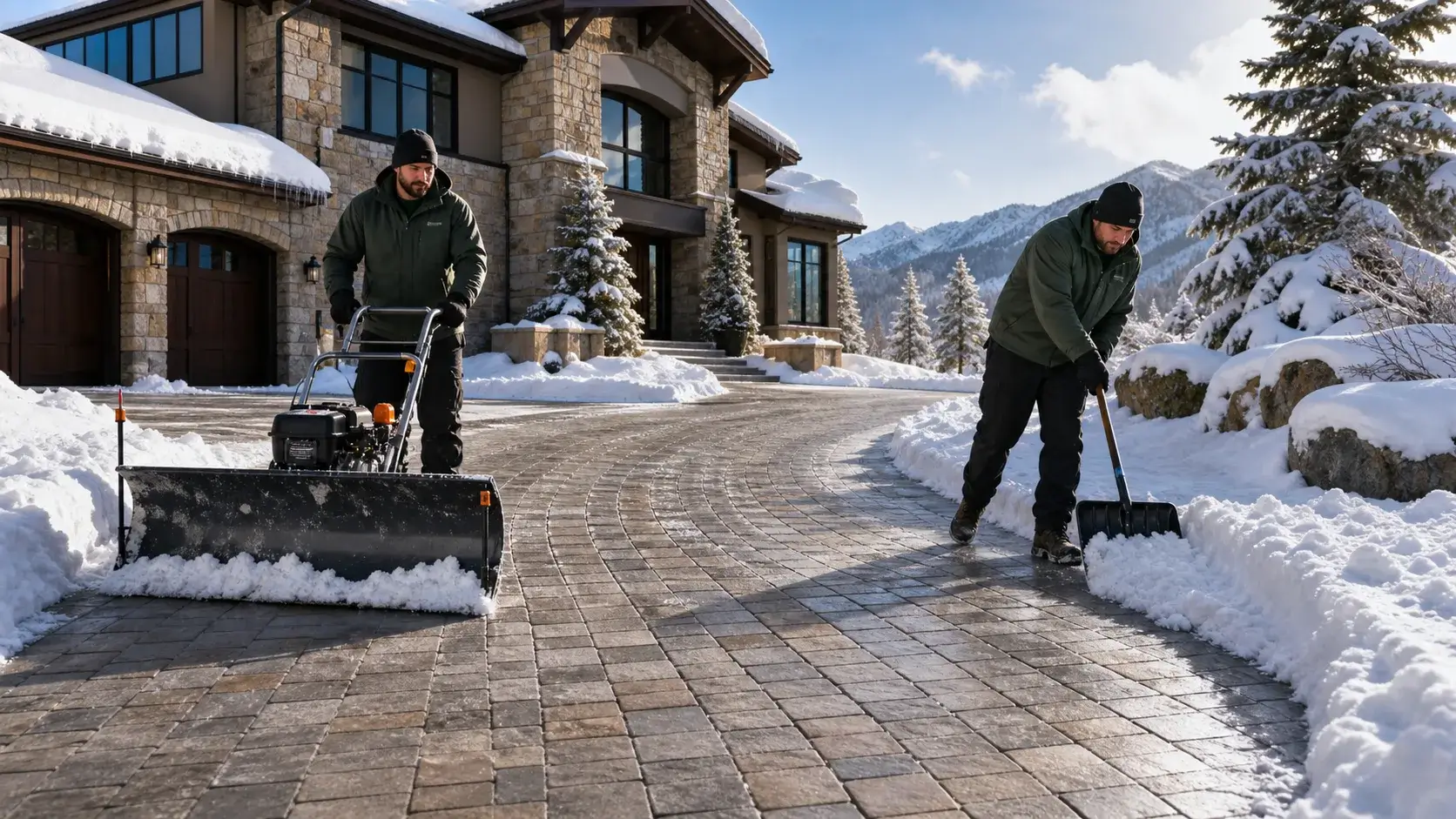
When the snow starts stacking up in Monument, most people grab a shovel and focus on clearing a safe path as fast as possible. That makes sense, but how you move that snow can quietly damage your driveway and hardscape, especially over a long winter with lots of storms.
In the Pikes Peak region, we get freeze-thaw cycles, surprise warmups, heavy, wet snow, and deep cold snaps. All of that is tough on concrete, pavers, and decorative finishes. In this article, we will walk through why winter is so hard on your driveway, which tools and products are safer to use, and how to approach driveway snow removal in Monument without hurting your hardscape.
Protect Your Driveway All Winter Long
From October into spring, Monument often sees:
- Frequent freeze-thaw swings
- Heavy, wet snow that compacts into thick layers
- Sudden deep freezes after melt days
- Wind that drifts snow into tall banks along driveways
Those conditions create a perfect setup for damage. When snow is scraped too hard, metal blades can crack pavers, chip the surface of concrete, or loosen borders. Decorative surfaces can get scratched or gouged, and that damage may not be clear until the snow melts.
De-icers and aggressive scraping can also stain or etch stamped concrete and colored finishes. What looks fine in January can show flaking, fading, and broken corners by spring. The good news is that with the right tools, gentle techniques, and smart timing, driveway snow removal in Monument can keep you safe and still protect the look and life of your driveway.
How Monument’s Winter Harms Your Driveway
The biggest hidden problem is the freeze-thaw cycle. Here is what happens on many driveways:
- Daytime sun melts snow into water
- Water seeps into joints, pores, and tiny cracks
- Nighttime temperatures drop and that water freezes
- Ice expands and forces the material apart
Over and over, this cycle widens joints and tiny cracks. Pavers can heave or settle, and concrete can start to flake or spall. Over and over, this cycle widens joints and tiny cracks. Pavers can heave or settle, and concrete can start to flake or spall.
Heavy equipment and bare metal blades add to the damage. On decorative concrete, stamped patterns, or exposed finishes, a steel blade can:
- Scratch or scrape off the top layer
- Chip edges and corners
- Break the bond at borders and control joints
Paver driveways are especially sensitive, since each unit is separate. A low plow blade can grab a high paver and tug it loose. Over time, the whole pattern can shift.
Harsh de-icing chemicals are another problem. Some products soak into concrete and natural stone and cause:
- Scaling and surface flaking
- Crumbling edges on steps and borders
- White or faded spots and stains
That kind of damage builds up year after year, shortening the life of your driveway and making it harder to repair cleanly.
Smart Tools and Techniques for Safer Snow Removal
The tools you choose matter a lot. Safer options for most Monument driveways include:
- Plastic-blade shovels or shovels with a rubber edge
- Wide snow pushers that glide instead of chop
- Snow blowers with adjustable skid shoes to hold the auger up slightly
- Compact equipment with rubber edges instead of bare metal
For technique, think about sliding, not hacking. A few simple habits help protect your hardscape:
- Push snow with the shovel at a shallow angle instead of chopping straight down
- Work with the slope so you are moving snow downhill when possible
- Keep plow or blower blades slightly raised on pavers or textured concrete
- Clear snow in thin layers rather than waiting until it is very deep
Timing is important too. It is usually better to clear snow early and often during a storm. When you let it build up and get driven on, it compacts into hard layers and ice. Removing that later often means more scraping, which is where damage happens.
De-Icing Products That Won’t Destroy Your Hardscape
Not all ice melt is the same, and Monument’s freeze-thaw swings can make the wrong choice very hard on concrete and stone. Common products include:
- Rock salt (sodium chloride): Cheap but harsh on concrete and nearby plants
- Calcium chloride: Works in lower temperatures but can be tough on decorative finishes
- Magnesium chloride: Gentler in many cases, but still not risk-free
- Blends: Mix of different salts with varied effects
For most driveways, safer strategies look like this:
- Use a concrete-safe ice melt, and only where needed
- Add sand or small grit for traction instead of more salt
- Focus on high-traffic zones like the garage apron, walkway, and steps, not the entire driveway
How you apply de-icer matters as much as which product you pick:
- Lightly spread ice melt before a storm only when conditions call for it
- Avoid piling product at edges, joints, and low spots where it can pool
- Once the surface is dry, sweep up leftover granules so they do not continue to soak in
This careful approach helps keep footing safe while reducing long-term damage to your hardscape and surrounding plants.
Special Care for Paver, Stamped, and Heated Driveways
Not every driveway is plain gray concrete. Pavers, stamped concrete, and heated systems each need a bit of special care.
For paver driveways in Monument, pay attention to:
- Protecting joint sand by using rubber-edged tools
- Keeping blades raised so they do not catch a high paver
- Checking for loose or rocking pavers before heavy snow arrives
It is often smart to have joint sand topped up and edges checked before winter so the pattern stays tight under snow load and plow traffic.
Stamped or decorative concrete also needs gentle handling:
- Avoid sharp turns with studded tires on the same spot
- Skip metal ice picks or chisels that can punch through the pattern
- Watch for areas where sealer or color looks thin and consider refreshing it before winter
Heated driveways and snow-melt systems can reduce how much shoveling you do, but they still need care. Even with heat, it is best to:
- Use soft tools to move slush off the surface so it does not refreeze at the edges
- Choose mild de-icers in small amounts only when needed
- Call a professional if you notice uneven melting, strange noises, or surface cracking over the heating lines
Good habits, combined with a thoughtful winter plan, can keep all types of driveways in Monument looking sharp and working well through snow season and into spring thaw.
Keep Your Driveway Clear And Safe All Winter
When snow starts piling up, let ABC Landscaping handle the hard work so you can get in and out of your driveway safely. Our professional driveway snow removal in Monument is fast, reliable, and tailored to local winter conditions. Reach out today through our contact page so we can schedule your service before the next storm hits.